Metal Finishing and Surface Engineering Technologies
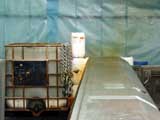
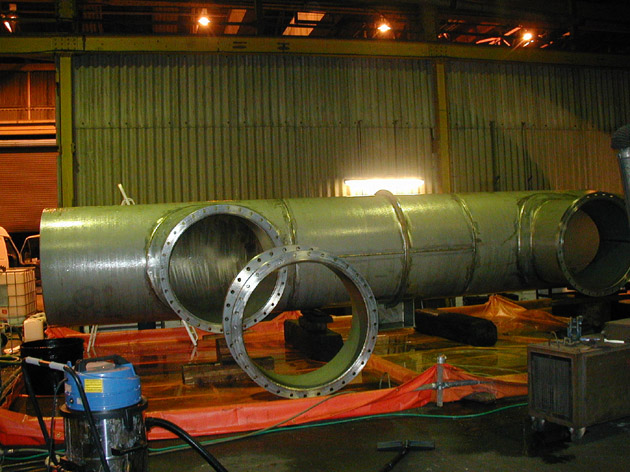
Stainless steel pickling is the most common pickling process used at our facility. We can pickle any part that can be transported to our workshops using our “out of tank” facility. This ensures that our pickling capabilities are second to none and gives us unique capabilities allows processing of oversized / extremely large parts that most other companies would not even consider.
The most common application is to pickle and passivate in a single step which removes heat tint and weld scale while simultaneously passivating the surface. However, where required, pickle and passivate can be performed in two complete and separate steps.
Degreasing Spray or Dip Pickling Internal (Circulation) Pickling Passivation
Pickling and Passivaton Services
Chemical Cleaning Services
StainlessRestoration LtdUndertake chemical cleaning work across all market sectors.
ASTM
A380 and ASTM A967 are codes of practice for the wide general industry. Other
sectors such as nuclear have their own codes currently ES 5361 -2 which we are
familiar with.
Chemical Pickling can deal with complicated
shaped objects to remove unsightly heat oxide colours from metal after the
product has been exposed to excessive heat such as the welding, straightening
operations and thermal heat treatments such as annealing or stress. These areas
are both unsightly and potential corrosion sites
Pickling can be performed either in-house at our 50,000ft² undercover Manchester facility or on your site anywhere in the world.
SRL have approved procedures for Pharmaceutic, Nuclear and for a
diverse range of clients across all sectors.
Our Quality Management
System is registered to ISO9001:2015 with The British Standards Institution.
Please contact our sales team on 0161 368 6191 or Email sales@stainrest.com
Pickling& Passivation
Arc welding or other processes that have a thermal cycle or heat input such as annealing or stress relieving can produce a heat tint (oxide scale) on the surface of stainless and nickel-based alloys. In some service environments a heat tint can decrease corrosion resistance. The conditions that cause heat tinting and chemical restoration of the surface are explained below..
Pickling is a controlled chemical dissolving of the stainless steel surface (etching or dissolution) causing a relatively small material loss . Typically 5 - 10µm is removed thus rendering a "new" virgin surface which is free from contamination caused by fabrication, manufacturing or product processing. Various methods can be employed including Immersion ( bath or vat ), Circulation (closed loop type ) or Spray (using a GEL pickle product )
Passivation is the "artificial" re-building of the passive layer or passive film that renders the surface of stainless steel passive or corrosion resistant (it is the low level of electrical conductivity across this film that helps maintain corrosion resistance). The surface will passivate naturally in an atmosphere containing oxygen, this is termed auto-passivation. ASTM A380 and ASTM A967 have a number of interpretations of passivation, this being SRL's preferred take on the subject.
Heat Tint Oxide Formation
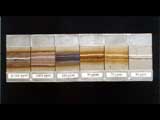
A heat tint oxide (scale) on an austenitic (300 Series) stainless steel exposed in air first becomes obvious at approximately 400°C (750°F). The oxide scale appears as a rainbow colour ranging from a straw colour (mild oxidisation) through a rose colour to dark blue. It is these dark blue heat tint oxides that are the most susceptible to localised corrosion attack. (Technical papers are available on request to support this explanation). The oxide scale is rich in chrome which has been leached from the underlying surface, hence leaving a chrome depleted sub-layer with lower PREN value.
Given the range of temperatures through which the heat affected zone (HAZ) of a cooling weld passes a combination of Cr¬enriched or Cr-depleted region will always form. Whether or not the heat tint should be removed prior to service depends on the given alloy, service conditions and environment. Preferential corrosion at heat tinted regions will likely occur where an alloy performs near its limit of corrosion resistance.
Pre-Cleaning and Pickling..
Should remove foreign material (including oxide scale) and permit the surface to equilibriate, effecting an electromechanical uniform surface resistant to localised corrosion. All pickling work is preceded by a thorough pre-clean cycle to prepare the surface for pickling, removal of dirt and grease is essential.
Passivation reduces the anodic reaction of an electrode involved in corrosion by the formation of a protective oxide film, the passive layer.
Stainless steels are self-passivating (provided the surface is cleaned and exposed without inhibitors such as dirt, grease etc.) on exposure to air and moisture due to their high chromium content (more than 11%).
Passivation treatment consists of augmenting the naturally occurring protective oxide film by chemical methods (forced passivation). The enhanced passive film is considerably thicker and more persistent than that formed by autopassivation.
Typically a mixture of nitric acid and hydrofluoric solutions are used to remove visible oxides; the composition and 'texture' of the acids is quite diverse. They are available as thick paste (applied by brush), a gel (applied by spray method) or as a bath solution (immersion and circulation methods). A nitric acid and hydrofluoric acid mixture (pickling), unlike nitric acid alone (passivation), is a reducing acid intended to remove iron and other metal oxides by chemical etching. This mixture is not a passive medium and corrosion rates are high during exposure. However. a uniform passive oxide film will re-form over the freshly cleaned surface after pickling by autopassivation.
NB. A clear distinction between pickling and passivation needs to be made. The mere presence of nitric acid in the pickling medium is not a guarantee of passivation, its purpose and function in this context is to take into solution the metal salts that have been dissolved from the surface pickled.
Pickling Methods
Immersion pickling in a bath or vat
Circulation pickling using a liquid around a pipe system - closed loop type
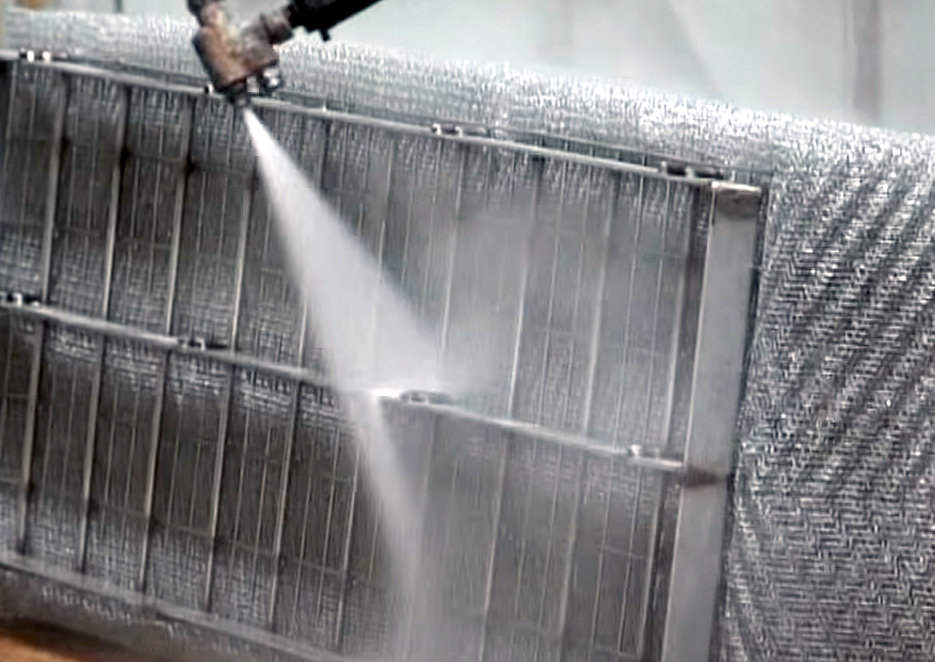
Spray pickling using a GEL pickle product (see Enerjex product range)
Brush (see Enerjex product range)
Pickle & Passivation Trouble Shooting
During, following or indeed before the cleaning operation all manner of strange things can occur as a result of the chemicals used.
Listed below are a variety of examples that Stainless Restoration has encountered over time. This list is by no means complete and will bee continually updated as we/you experience other strange phenomena
Scratches
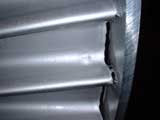
Surface scar or scratch caused possibly by contact with carbon steel "iron" tooling.
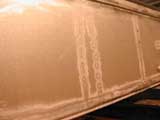
"Frosting" of the welds is one sign of over pickling. This is often seen in TIG weld deposits. MMA, MIG and FCW weld deposits are not so sensitive to frosting.